
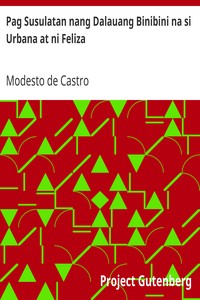
Pag Susulatan nang Dalauang Binibini na si Urbana at ni Feliza by Modesto de Castro
Let's be honest, a book of letters from 1864 might sound like homework. But trust me, Modesto de Castro's classic is anything but. Written under the pen name 'Urbana at Feliza,' it's presented as the real correspondence between two sisters, and it pulls you right into their world.
The Story
The book is built entirely from letters. Urbana, the older sister, is in Manila being educated and exposed to sophisticated city life. Feliza, the younger, remains in their provincial hometown, managing the household. Their back-and-forth covers everything. Urbana writes about new fashions, social gatherings, and modern ideas. Feliza updates her on local news, family health, and the practicalities of home. The real story is in the tension between their two worlds. Urbana's letters sometimes show her looking down on provincial ways, while Feliza gently reminds her of duty and tradition. Their mother, Doña Teresa, often chimes in with her own letters, full of anxious advice about proper conduct, choosing a husband, and staying true to their faith and family values. There's no giant plot twist; the drama is in the quiet conflict of a family navigating change.
Why You Should Read It
I was shocked by how familiar it all felt. The sisters argue about the same things we might: how to deal with parents, the pressure to succeed, and balancing new experiences with your roots. Reading it, you get an incredible, ground-level view of 19th-century Philippine society. You learn about the social rules, the dreams of young women, and the fears of their parents, not from a historian, but from the people living it. Modesto de Castro, a priest, used this format to teach proper Christian and Filipino values, but the characters feel so real that the 'lesson' doesn't feel heavy-handed. You end up rooting for both sisters, understanding Urbana's thirst for more and Feliza's steadfast loyalty.
Final Verdict
This is a perfect pick for anyone curious about Philippine history and culture but wants to avoid academic texts. It's for readers who love character-driven stories and seeing the past through intimate, personal moments. If you enjoyed the family dynamics in books like 'Little Women' or the epistolary style of 'Dangerous Liaisons,' but want a uniquely Filipino perspective, you'll find a gem here. It's a quiet, thoughtful book that proves some family conversations are truly timeless.
This is a copyright-free edition. You can copy, modify, and distribute it freely.
Deborah Young
1 year agoI came across this while browsing and it provides a comprehensive overview perfect for everyone. Exceeded all my expectations.
Jennifer Martinez
7 months agoThanks for the recommendation.




Kimberly Martin
1 year agoI came across this while browsing and it manages to explain difficult concepts in plain English. Definitely a 5-star read.